



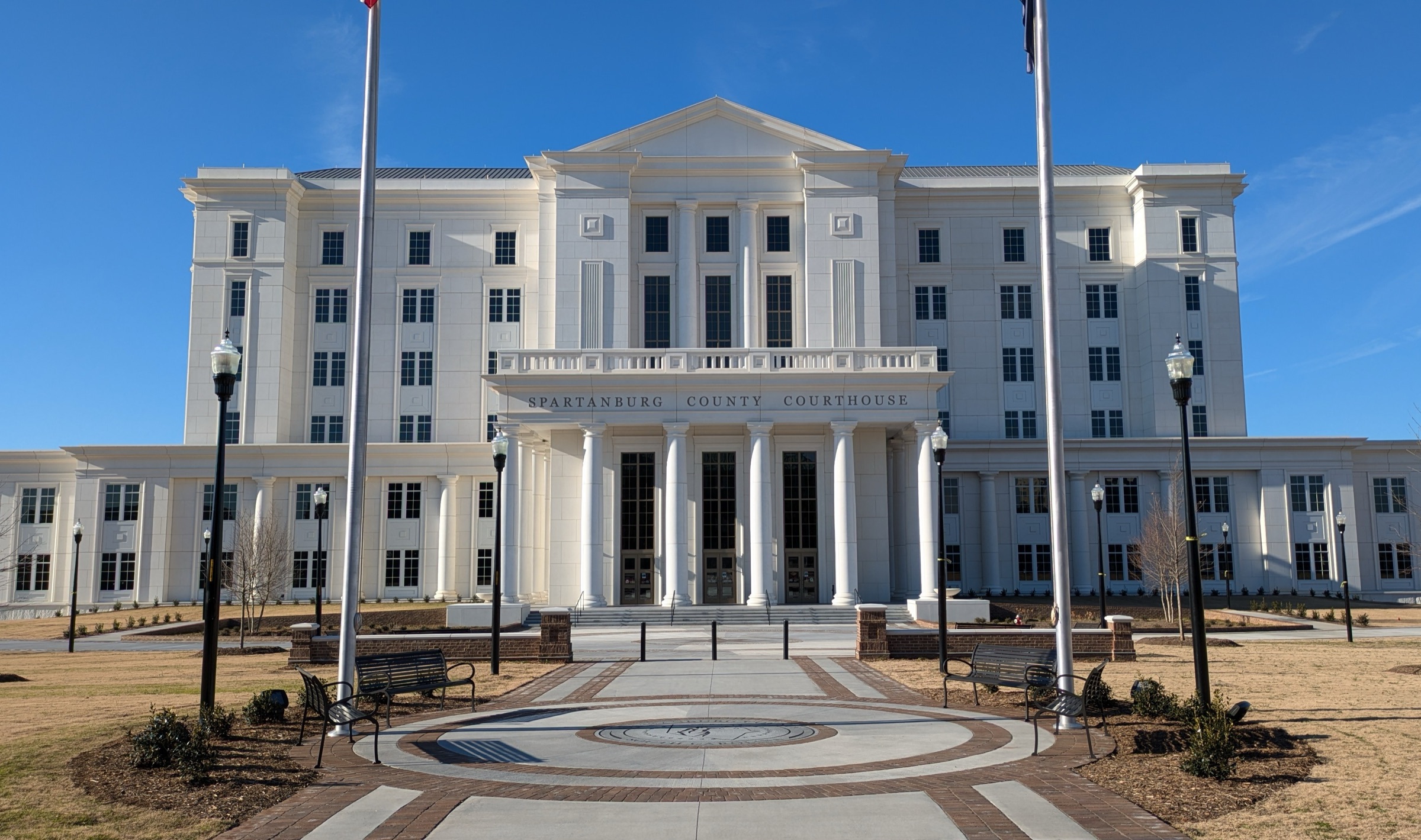
A probation violation hearing comes down to a single question, whether you go back in or keep serving your sentence in the community. It is not a retrial of the case that put you on probation. It is a hearing about whether the terms of that sentence were broken and what should happen next. For sentences out of General Sessions in Spartanburg County, that hearing happens at the Spartanburg County Courthouse on Magnolia Street.
Here's the short version:
- The hearing is narrow. The judge is deciding custody or continued supervision, not guilt on the original charge.
- If you missed a court date or a probation appointment, a bench warrant has probably been issued, and it is better to deal with it before the police find you.
- Being represented at the hearing matters, because someone has to present the other side of the story and a workable alternative to incarceration.
What a Probation Violation Hearing Actually Is
Probation is a sentence you serve in the community under conditions. A violation hearing is what happens when the state says those conditions were not met. The allegation might be a missed appointment, a failed or missed test, unpaid fees, a new arrest, or moving without telling anyone. The form of the allegation changes the argument, but it does not change the question in front of the judge.
That question is whether you go back in or keep your sentence in the community. Everything that happens at the hearing points at that one decision. Explanations about why an appointment was missed, proof of employment, treatment records, housing, family obligations, the length of time you have gone without a problem, all of it is relevant only because it helps the judge answer that question one way or the other.
Felonies and serious misdemeanors in Spartanburg County are prosecuted by the Seventh Circuit Solicitor in General Sessions at the courthouse on Magnolia Street, and violation matters on those sentences are handled in that same court. If the underlying sentence came out of another county, the hearing is held in that county's court. Brendan M. Delaney has tried cases in Spartanburg, Greenville, Cherokee, Pickens, Anderson, Laurens, Greenwood and Oconee counties, so a sentence from a neighboring county is familiar ground rather than a reason to start over with a new lawyer.
If you are not sure how your case got to this point, the firm's walkthrough of the stages of a criminal case in Spartanburg County explains how a General Sessions case moves from arrest to sentence, which is the sentence a violation hearing now puts at risk.
Before the Hearing, the Warrant Problem
Most people do not learn about a violation from a letter. They learn because they missed something and now they are waiting to be picked up. If a court date or a required appearance was missed, assume a bench warrant has been issued. The practical advice is simple. Call before the police find you.
Clearing an active warrant on your terms is a very different experience than being arrested on it at a traffic stop or at work. It lets the hearing be scheduled rather than triggered, and it lets you walk in with records, a job, and a plan instead of walking in from a holding cell. The firm's guide to clearing an active warrant in South Carolina covers how that process is handled and why the order of events matters so much.

The Spartanburg County Courthouse on Magnolia Street, where General Sessions matters in Spartanburg County are heard.
What the Hearing Looks Like From Your Seat
Expect the state to present the alleged violation first. A probation agent is usually the one explaining what the file shows. Then your side is heard. That is where an explanation becomes evidence, and where a judge gets something to weigh other than a list of missed dates.
The work that decides these hearings happens before the hearing. Pulling treatment or counseling records. Confirming employment. Documenting transportation problems, medical issues or a work schedule that collided with an appointment. Being able to point at a concrete, supervised arrangement that keeps you accountable in the community. None of that assembles itself the morning of court.
Brendan appears at the violation hearing himself. He asks questions about the case, listens to your concerns, reviews every aspect of the matter and builds a strategy around your goals, which in a violation hearing almost always means staying out and keeping the sentence on track. That same approach is described in more detail on the firm's criminal defense page.
| Helps your position at the hearing | Works against you |
|---|---|
| Dealing with a warrant before you are picked up on it | Waiting and hoping the warrant is not served |
| Records that explain the missed obligation | An explanation with nothing to back it up |
| Steady work, stable housing, family support, documented | Nothing in the file but the agent's report |
| A specific, supervised plan for the rest of the sentence | Asking for another chance with no structure attached |
| A lawyer who knows the court and appears with you | Standing up alone to answer the allegation |
Why the Stakes Run Past the Courtroom
A violation does not stop at the hearing. Charges and sentences carry consequences beyond the sentence itself, including gun rights, housing and custody. If a Family Court case is open or a custody order is in place, time in custody and a violation on the record can show up in that case too, which is why some people need both a defense lawyer and a plan for their family law matter at the same time.
There is also the matter of what happens after. If the sentence is kept in the community, the conditions are still there, and the next hearing is avoided only by meeting them. Part of the conversation at this stage is what realistically needs to change so there is not a second violation.
Talk to Brendan M. Delaney Law Firm LLC Before Your Hearing
We represent people at probation violation hearings in Spartanburg County and across the Upstate, including Boiling Springs, Duncan, Lyman, Roebuck, Gaffney, Greenville, Greer and Union. Brendan M. Delaney has 26 years in practice and has practiced in the Upstate of South Carolina since 2000, with a focus on criminal defense, family law and personal injury.
If you have a violation hearing coming up, or you believe a bench warrant is already out, call 864-584-5835 or reach Brendan M. Delaney Law Firm LLC. The office is at 184 N Daniel Morgan Ave, Spartanburg, SC 29306, open 9 AM to 5 PM.
FAQs
Is a probation violation hearing the same as a new trial?
No. The hearing is not a retrial of the charge that put you on probation. The judge is deciding whether you go back in or keep serving your sentence in the community, so the evidence that matters is the evidence about the alleged violation and about your situation now.
Where will my violation hearing be held in Spartanburg?
Sentences out of General Sessions in Spartanburg County are handled at the Spartanburg County Courthouse on Magnolia Street, where the Seventh Circuit Solicitor prosecutes felonies and serious misdemeanors. If your sentence came from another county, the hearing takes place in that county's court.
I missed a probation appointment and now I think there is a warrant. What should I do?
Assume a bench warrant has been issued and call a lawyer before the police find you. Clearing it on your terms lets the hearing be scheduled, which gives you time to gather records and present a plan rather than appearing from custody.
Can I just explain what happened to the judge myself?
You can speak, but an explanation carries far more weight when it is backed by records and presented alongside a concrete plan for the rest of the sentence. Brendan appears at the hearing himself, presents that material and argues for an outcome that keeps the sentence in the community.
Does a probation violation affect anything other than my sentence?
It can. Criminal matters carry consequences beyond the sentence, including gun rights, housing and custody, so an open Family Court case can be affected by what happens at a violation hearing. It is worth raising any pending family matter in the first conversation.