



Sentencing in Spartanburg Criminal Court determines the punishment for someone convicted of a crime, whether through a trial or a guilty plea. The judge considers several factors, including the Presentence Investigation Report (PSI), which details the defendant’s background, offense, and criminal history. Mitigating factors, such as age or mental health, can reduce the sentence, while aggravating factors, like repeat offenses, can increase it. Victims may also provide impact statements, and defendants have the right to address the court directly.
Key points:
- Presentence Investigation Report (PSI): A detailed document prepared by a probation officer, covering the defendant’s history and the offense.
- Sentencing Factors: Includes criminal history, offense severity, and victim impact statements.
- Defendant’s Role: You can review the PSI for errors, submit character letters, and make a personal statement to the judge.
- Possible Outcomes: Sentences can include fines, probation, incarceration, or alternative programs like Homeless Court.
Preparation and legal representation are critical to achieving the best possible outcome.
Preparing for Sentencing and the Presentence Investigation Report
Before sentencing, a probation officer conducts a detailed investigation into your background and offense to create the Presentence Investigation Report (PSI or PSR). This report is a key factor in the judge’s decision-making process.
Understanding the Presentence Investigation Report
The PSI is compiled by a probation officer acting as an independent and impartial investigator for the court. As the U.S. Courts explains:
The probation officer conducts an independent and impartial investigation of the defendant and the offense before making a sentencing recommendation to the judge.
This report goes far beyond a basic summary. It includes an in-depth account of your offense, criminal history, personal background, and the impact on any victims. It outlines the offense details, formal charges, your role in the crime, and whether you accepted responsibility. Your criminal history is thoroughly documented, listing all prior arrests and convictions, which can heavily influence sentencing outcomes.
The report also delves into your personal history, covering areas such as childhood, family relationships, education, employment, and military service. It examines your physical and mental health, any history of substance abuse, and provides a full financial profile, including assets and debts. Victim impact statements are included to reflect the harm caused to others. Finally, the probation officer calculates sentencing guidelines, incorporates statutory requirements, and provides a formal recommendation to the judge.
Importantly, the PSI is a confidential document and not accessible to the public. In federal cases, you and your attorney will receive a copy at least 35 days before sentencing. This allows time to review the report and address any inaccuracies. Additionally, the Bureau of Prisons uses the PSI to determine custody placement and programming if incarceration is required. Reviewing this document carefully is a critical step in preparing for your sentencing hearing.
Steps Defendants Should Take Before Sentencing
Errors in the PSI can directly impact your sentence, so preparation is essential. Start by gathering important documents early, such as birth certificates, marriage licenses, military discharge papers (DD214), diplomas, tax returns, pay stubs, and medical records. Having these ready before your probation officer interview ensures accuracy and avoids delays.
Once your documents are in order, focus on preparing for the interview. Work closely with your attorney to provide truthful and consistent information. Probation officers often verify details by reaching out to family, employers, and law enforcement, so discrepancies can lead to complications or harsher outcomes.
After receiving the draft PSI, review it line by line. Pay close attention to employment dates, criminal history entries, and offense descriptions for potential errors. As US Law Explained notes:
A single misplaced point can change the [criminal history] category and add months or years to the recommended sentence.
If you find inaccuracies or disagree with the report’s calculations, your attorney can file formal objections to address these issues.
Finally, consider submitting character letters to highlight your positive qualities. Letters from family, employers, or community members that provide specific examples of your character can help show the probation officer and judge a more complete picture of who you are. These letters may influence both the PSI’s recommendations and the judge’s final decision.
sbb-itb-ce0cbb0
How the Sentencing Hearing Works in Spartanburg General Sessions Court
Once the Pre-Sentence Investigation (PSI) report is completed and any objections are addressed, the case proceeds to the sentencing hearing. This is where the judge reviews evidence and arguments from both sides to decide your punishment.
What Happens During Sentencing
In Spartanburg, a Circuit Court Judge oversees sentencing for serious crimes, including those punishable by life imprisonment or capital offenses. The judge’s role is to ensure you understand the charges against you and your rights throughout the process.
The hearing usually follows either a jury conviction or a guilty plea. If you’ve entered a negotiated plea, the sentence might already be agreed upon by your attorney and the prosecution. On the other hand, with an open plea, the judge has the authority to decide your punishment. During the hearing, your attorney will highlight mitigating factors, such as your age, mental health, or acceptance of responsibility, while the prosecution will focus on aggravating factors.
The judge evaluates the PSI report, legal requirements, sentencing guidelines, and the arguments from both sides before making a decision. Additionally, input from victims and the defendant is considered before the sentence is announced.
Victim Statements and Defendant’s Right to Speak
After the arguments from the prosecution and defense, the court hears from victims and the defendant. In South Carolina, victims have the right to be informed about and attend all court proceedings related to the case. At the sentencing hearing, they can share their concerns and opinions about the case or the defendant directly with the judge.
Once the prosecution and victims have spoken, you have the opportunity to speak directly to the court through a process called allocution. This is your chance to express remorse, explain your circumstances, or ask for leniency. It’s important to work with your attorney to prepare a clear and thoughtful statement, as what you say can influence the judge’s decision. After all parties have spoken, the judge announces the sentence and explains their reasoning.
Factors That Affect Sentencing Decisions
When a judge in Spartanburg decides on a sentence, several key factors come into play that can shape the final outcome. Since South Carolina lacks mandatory sentencing guidelines, judges craft sentences based on the unique details of each case. Much like the insights provided in a PSI (Pre-Sentence Investigation) report, these factors help build a personalized framework for sentencing. Below, we’ll explore how a person’s criminal history and the seriousness of their offense influence sentencing decisions.
How Criminal History and Offense Severity Impact Sentencing
Your criminal record is a major consideration when it comes to sentencing. Judges look closely at the number, timing, and seriousness of past offenses to determine whether someone is a repeat offender or facing charges for the first time. For instance, a repeat offender convicted of a Class B felony like manslaughter (which carries a maximum of 25 years) might receive a sentence of 15–20 years, whereas a first-time offender might face 5–10 years. Repeat offenders with a history of felonies often face stricter sentences and are less likely to qualify for probation.
The seriousness of the current offense is another crucial factor. In South Carolina, felonies are ranked from Class A (up to 30 years for crimes like kidnapping or armed robbery) to Class F (up to 5 years for offenses such as voter fraud or brandishing a firearm). Judges evaluate the specifics of the crime – such as the level of violence involved, the number of victims, whether the act was planned, and the overall impact on those harmed – to determine an appropriate sentence.
South Carolina Sentencing Guidelines and Solicitor Recommendations
The South Carolina Sentencing Guidelines Commission offers recommendations that classify crimes into felony and misdemeanor categories, each with statutory maximums. In Spartanburg’s 14th Judicial Circuit, solicitors rely on these guidelines – along with input from senior attorneys – to propose sentences based on the severity of the offense and the defendant’s criminal history. These recommendations are typically presented early in the legal process and generally remain unchanged unless new information comes to light. Judges can choose to accept, reject, or modify these suggestions, but they carry significant weight – particularly in plea deals, where the judge must approve or deny the entire agreement. This approach helps streamline the process, reducing any incentive to delay trials in hopes of receiving a lighter sentence.
Types of Sentences and Alternative Programs
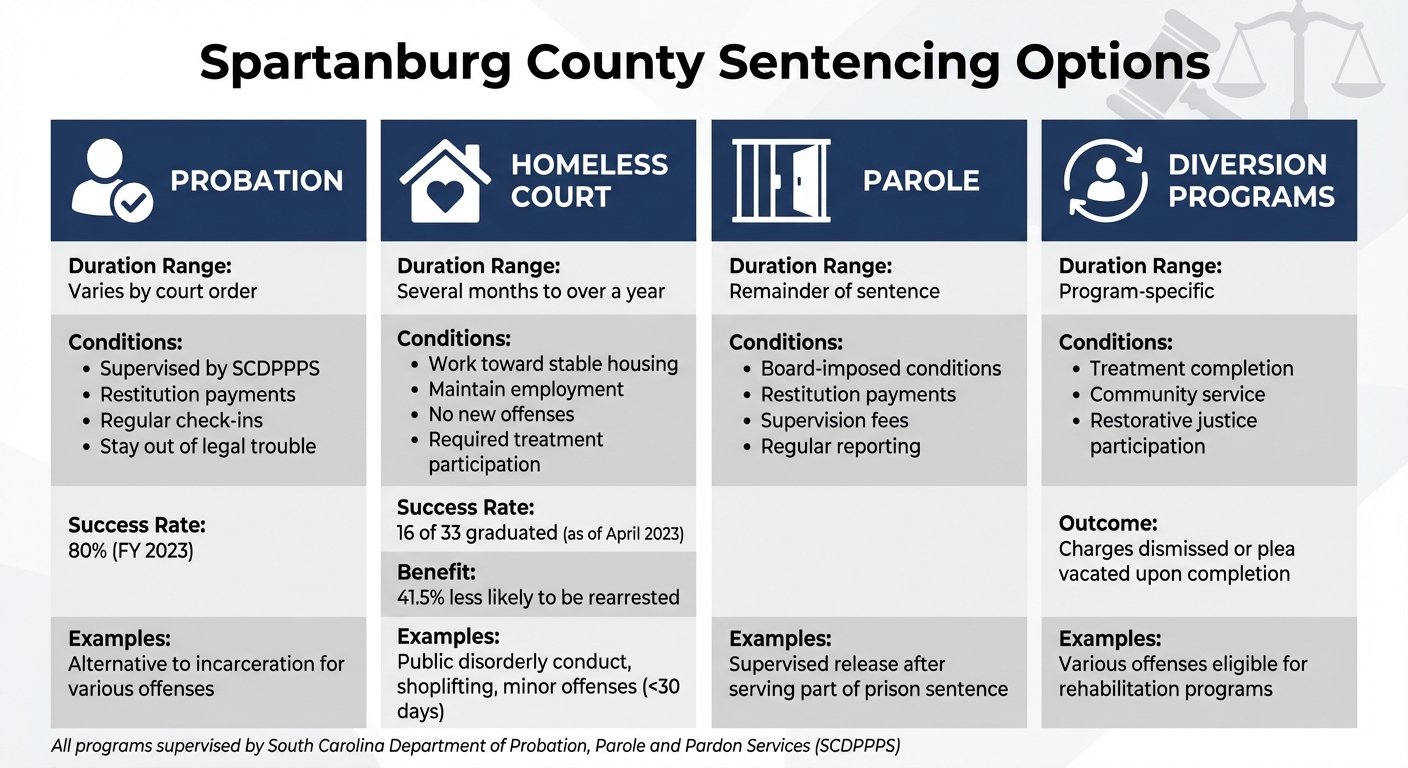
Spartanburg County Sentencing Options: Types, Duration, and Conditions
After weighing the factors mentioned earlier, a judge determines a sentence tailored to the specifics of the case. In Spartanburg, defendants can face a variety of outcomes, including fines, probation, incarceration, or participation in alternative programs. These programs aim to address underlying issues rather than focusing solely on punishment. Below, we detail the different types of sentences and the alternative programs available.
Fines, Probation, and Jail or Prison Sentences
Fines are often imposed for misdemeanors or less severe felonies. The amount can vary, ranging from a few hundred dollars for minor violations to several thousand dollars for more serious offenses.
Probation allows defendants to avoid incarceration by complying with court-ordered conditions under the supervision of the South Carolina Department of Probation, Parole and Pardon Services (SCDPPPS). Requirements often include regular check-ins, restitution payments, and staying out of further legal trouble. In Fiscal Year 2023, South Carolina reported an 80% probation success rate.
Jail or prison sentences involve incarceration, with jails typically housing individuals convicted of misdemeanors (serving up to one year) and prisons holding those convicted of felonies (serving sentences ranging from several years to decades). In some cases, parole offers early release from prison, provided the individual adheres to supervision and conditions set by the parole board.
For cases involving mitigating factors, alternative programs provide a chance for rehabilitation. These programs aim to address the root causes of criminal behavior. One example is the Spartanburg Homeless Court, which began in late 2019. This program is designed for individuals experiencing homelessness or at risk of homelessness, especially those charged with offenses like public disorderly conduct or shoplifting. Admission is at the discretion of the 7th Circuit Solicitor’s Office, and participants must show they are actively working toward stable housing and receiving necessary treatment.
Chief Municipal Judge Erika McJimpsey explained:
What I’ve come to understand in my years on the bench is the stigma and shame of homelessness. We aim to restore hopefulness.
As of April 2023, 16 out of 33 participants had graduated from the program, with their charges dismissed upon successful completion. For example, Ahmad Boneparte, arrested in February 2022 for public disorderly conduct, graduated in March 2023. He secured stable housing by December 2022, maintained a full year of employment, and avoided a criminal record. Studies indicate that participants in restorative justice programs are 41.5% less likely to be rearrested compared to those in the traditional system.
Sentence Types in Spartanburg County: A Comparison
The table below outlines the main sentencing options available in Spartanburg County.
| Sentence Type | Duration Range | Conditions | Examples |
|---|---|---|---|
| Probation | Varies by court order | Supervised by SCDPPPS, restitution, fees | Alternative to incarceration for various offenses |
| Homeless Court | Several months to over a year | Must work toward stable housing and employment; no new offenses | Public disorderly conduct, shoplifting, or other minor offenses (< 30 days) |
| Parole | Remainder of sentence | Board-imposed conditions, restitution, fees | Supervised release after serving part of a prison sentence |
| Diversion Programs | Program-specific | Treatment, community service, or restorative justice participation | Can result in charges being dismissed or a plea being vacated upon completion |
If you’re eligible for an alternative program, consider seeking pro bono legal advocacy. For instance, participants in the Homeless Court receive attorney-advocates at no cost. Collaborating with community partners can also help address underlying challenges, such as suspended licenses, lack of insurance, or incomplete Social Security filings.
Your Rights During Sentencing and How to Prepare
Your constitutional rights are a crucial factor in shaping the outcome of your sentencing. For instance, the Sixth Amendment ensures your right to legal representation at every stage of the legal process, including sentencing. If hiring a lawyer isn’t financially feasible, you have the right to request a court-appointed attorney. This protection, along with others, allows you to actively participate in the sentencing process.
One key right during sentencing is allocution, which gives you the opportunity to address the judge directly before a sentence is imposed. According to the Wex Definitions Team:
Allocution is the right of the defendant to directly address the judge without the help of counsel. During this direct address, the defendant may offer a personal explanation of any unknown facts, may ask for mercy, or may offer an apology for the criminal behavior.
This moment allows you to express remorse, clarify your intentions, or provide context for your actions.
In addition, due process gives you the right to present mitigating evidence and call witnesses to support your case against harsher penalties. Examples of mitigating evidence could include character references, proof of employment, records of community involvement, or documentation of mental health treatment. Using the sentencing hearing to explain your motivations and circumstances can be a strategic way to encourage the judge to consider leniency.
To prepare effectively, work with your attorney to draft a clear and respectful allocution statement that demonstrates accountability. Gather all relevant mitigating evidence, such as letters of support from employers or community members, and ensure everything is well-organized. Being prepared with strong supporting materials can significantly influence the judge’s decision. With these rights and a solid plan, you can take meaningful steps to impact your sentencing outcome positively.
Conclusion
Understanding the sentencing process in Spartanburg Criminal Court can play a pivotal role in shaping the outcome of your case. Sentencing decisions are influenced by a range of factors, including the seriousness of the offense, prior criminal history, mitigating evidence, and victim impact statements. Judges rely on structured guidelines to determine sentences but also have the flexibility to consider your specific circumstances when deciding between presumptive, mitigated, or aggravated sentencing ranges.
Having an experienced attorney by your side is essential. A skilled lawyer can emphasize mitigating factors, negotiate plea agreements, and ensure the court views your unique record rather than defaulting to the harshest penalties. As highlighted by the Durham District Attorney’s Office:
Usually [the maximum penalty] refers to the maximum possible sentence for the crime class, not for a specific defendant, his individual prior record level, and the unique facts of his case. It may be unlikely or even impossible for a particular defendant to receive that maximum punishment.
Preparation is equally critical. Collaborate with your attorney to compile relevant documentation, understand how sentencing guidelines apply to your case, and craft a compelling allocution statement. Keep in mind that under structured sentencing for felonies, defendants often serve 100% of their minimum sentence and at least 85% of their maximum sentence. This makes it all the more important to advocate effectively for the best possible outcome.
The sentencing hearing is your chance to share your story and request leniency. With careful preparation and strong legal representation, you can protect your rights and work toward a more favorable resolution.
FAQs
Can I fix mistakes in my PSI before sentencing?
Yes, you can correct errors in your Presentence Investigation Report (PSI) before sentencing. Carefully reviewing the report and identifying any inaccuracies is crucial to ensure the information presented to the court is accurate. Addressing these mistakes can play an important role in ensuring a fair sentencing process.
What should I say (and not say) during allocution?
During allocution, it’s crucial to approach your statement with respect and sincerity. Use this opportunity to express genuine remorse, provide context about your personal circumstances, or make a brief, relevant statement regarding your case. However, steer clear of making excuses, shifting blame, or being disrespectful or dishonest – these actions could negatively impact your sentencing.
What to do: Speak respectfully, keep your statement concise, and acknowledge the gravity of the situation.
What to avoid: Avoid excuses, blaming others, or making false or disrespectful remarks. Always consult your attorney for tailored advice.
Can I get probation or an alternative program instead of jail?
Sentencing outcomes in Spartanburg Criminal Court may involve fines, probation, or incarceration. The decision to grant probation or place someone in an alternative program depends on several factors, including the details of the case and the judge’s discretion.