




If you’re facing a first-time misdemeanor in Boiling Springs, hiring a lawyer can make a big difference. While misdemeanors are less severe than felonies, they still carry serious consequences like jail time, fines, and a permanent criminal record. South Carolina’s legal system is strict, and even minor mistakes in self-representation can lead to worse outcomes.
Here’s why legal help is important:
- South Carolina’s Penalties Are Tough: Misdemeanor sentences can go up to three years, unlike many states where they’re capped at one year.
- Complex Legal Process: Courts expect self-represented individuals to follow the same rules as attorneys, making it easy to make costly errors.
- Long-Term Impact: A conviction can hurt your job prospects, housing applications, and education opportunities.
- Programs for First-Time Offenders: Options like Pretrial Intervention (PTI) can lead to dismissed charges, but navigating these programs is easier with a lawyer.
Hiring a lawyer early can protect your rights, help negotiate with prosecutors, and explore alternatives to conviction. Without legal expertise, you risk harsher penalties and a more challenging future.
Misdemeanors in South Carolina: What You Need to Know
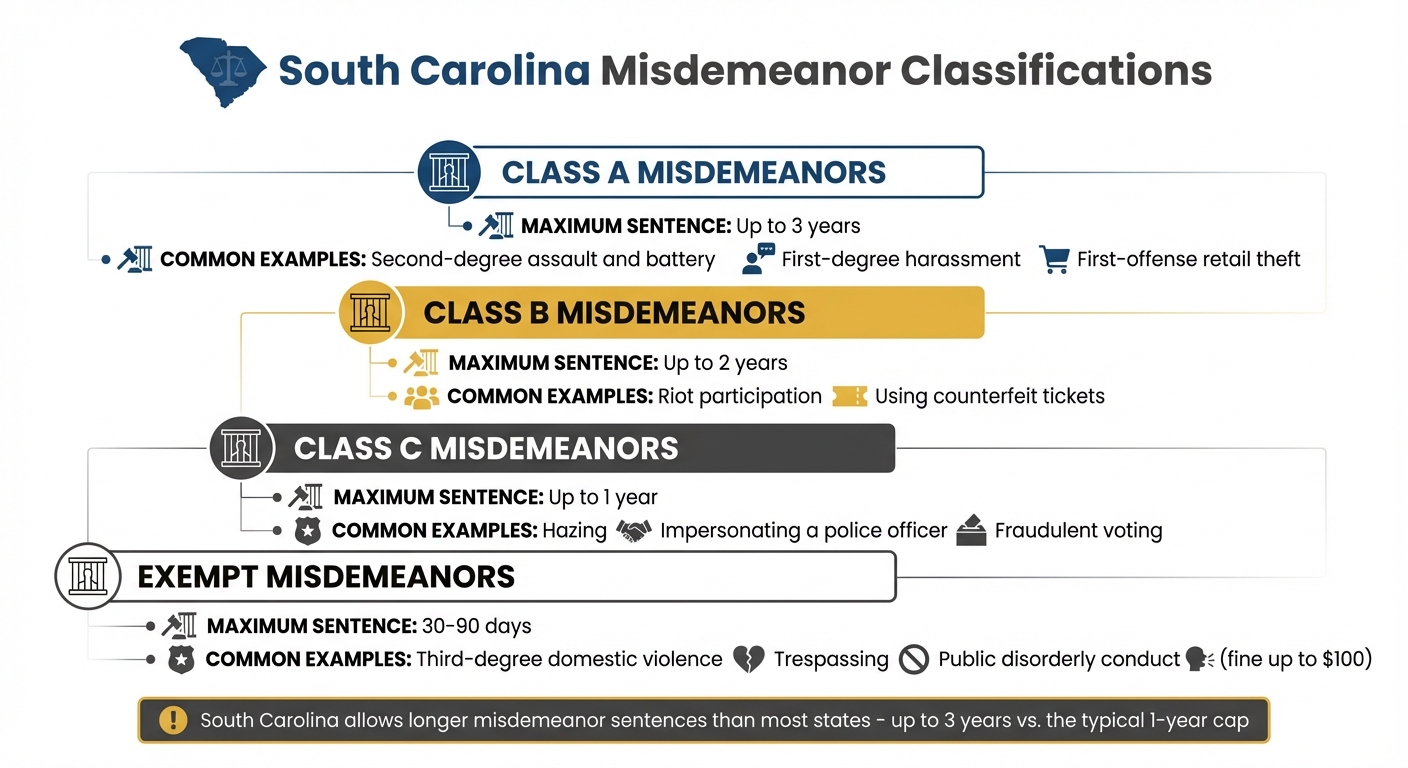
South Carolina Misdemeanor Classifications and Penalties Guide
What Counts as a Misdemeanor?
In South Carolina, crimes are categorized as either felonies or misdemeanors. While misdemeanors are often considered less severe than felonies, South Carolina’s laws allow for longer sentences compared to many other states. For instance, certain misdemeanor convictions can result in prison sentences of up to three years.
Misdemeanors are divided into four categories: Class A (up to three years), Class B (up to two years), Class C (up to one year), and Exempt offenses, which typically carry jail terms ranging from 30 to 90 days. Additionally, repeat offenses may lead to charges being upgraded to felonies.
Understanding these classifications is essential, especially for those facing common first-time misdemeanor charges.
Typical First-Time Misdemeanor Charges
In places like Boiling Springs and across South Carolina, first-time offenders are often charged with crimes such as assault, shoplifting, disorderly conduct, or vandalism. Other frequent charges include resisting arrest, first-offense DUI, simple drug possession, reckless driving, third-degree domestic violence, and trespassing.
These offenses span all four misdemeanor categories. For example:
- Class A offenses often include second-degree assault and battery, first-degree harassment, and first-offense retail theft.
- Class B offenses may involve riot participation or using counterfeit tickets.
- Class C offenses typically include hazing, impersonating a police officer, and fraudulent voting.
- Exempt misdemeanors cover charges like third-degree domestic violence, trespassing, and public disorderly conduct.
While these charges vary in severity, they all carry consequences that go beyond the courtroom.
Penalties for Misdemeanor Convictions
Misdemeanor convictions in South Carolina often come with more than just jail time. They typically include fines and fees, which can add up quickly. For instance, a public disorderly conduct charge may result in a fine of up to $100. On top of this, offenders often face additional court costs and administrative fees.
In some cases, judges may opt for alternatives to incarceration, such as probation, community service, or restitution to victims. First-time offenders charged with certain crimes, like public disorderly conduct, might be eligible for conditional discharge. This program involves probation and treatment, and upon successful completion, the charges are usually dismissed. However, participants must pay a $150 fee to the summary court.
The consequences of a misdemeanor conviction can extend far beyond fines and jail time. A permanent criminal record can make it harder to find a job, secure housing, or pursue educational opportunities, as background checks often reveal past convictions. For first-time offenders, exploring options like Pretrial Intervention (PTI) or determining eligibility for expungement can help mitigate these long-term effects.
The Risks of Representing Yourself
Navigating the Criminal Justice System
Representing yourself in court comes with serious challenges, especially when facing the South Carolina criminal justice system. Here, self-represented defendants are held to the same standards as licensed attorneys. This means you’re expected to follow all procedural rules, meet strict filing deadlines, and present evidence correctly, just as a trained lawyer would[8, 11].
While court staff can provide basic procedural guidance and forms, they cannot offer legal advice or tell you what to say in court. This leaves you to navigate critical decisions – like filings and procedural steps – entirely on your own. Missing even one of these can have serious consequences, such as waiving your rights, including the right to a jury trial[6, 11]. For first-time defendants, these stringent requirements make an already intimidating process even more difficult.
The Risk of Worse Outcomes
Without legal expertise, many first-time offenders miss opportunities that could result in better outcomes. Programs like Pretrial Intervention (PTI) or the Alcohol Education Program (AEP) can lead to the expungement of arrest records, but many defendants don’t even know these options exist or how to apply for them[3, 11]. Paying a fine might seem like the easiest solution, but it’s legally considered a guilty plea. This decision can permanently affect your record and eliminate negotiation opportunities.
Attorneys, on the other hand, are skilled negotiators who can work with prosecutors to reduce charges or secure lighter sentences. Self-represented defendants usually lack this ability and often struggle to navigate the South Carolina Rules of Evidence. Without a clear understanding of these rules, you may fail to object to improper testimony or challenge questionable evidence – mistakes that can lead to unnecessarily harsh penalties.
The Stress of Handling Your Own Defense
Beyond the legal risks, the emotional and logistical pressures of self-representation are immense. Balancing your defense with personal and professional responsibilities increases the likelihood of procedural missteps. You’ll need to handle every aspect of your case, including investigating, interviewing witnesses, preparing statements, and conducting cross-examinations – all while adhering to strict evidence rules.
The stakes couldn’t be higher. Missing a single court date can result in an immediate bench warrant, bond revocation, or even a license suspension[6, 8, 11]. A Failure to Appear (FTA) is treated as a separate misdemeanor, punishable by up to 30 days in jail and a $500 fine, plus court costs. The emotional toll of managing your own defense can be overwhelming. A single mistake could lead to conviction, underscoring why professional legal representation is so critical in first-time misdemeanor cases.
How a Lawyer Helps with First-Time Misdemeanor Cases
Protecting Your Rights
Defense attorneys play a critical role in safeguarding your rights from the moment of arrest through the resolution of your case. For instance, they can challenge evidence obtained unlawfully, such as during a traffic stop or arrest that violates your Fourth Amendment rights. By petitioning the court to exclude such evidence, they ensure that improper procedures don’t unfairly impact your case. They also help prevent costly missteps – like pleading guilty at a bond hearing, which could lead to a permanent criminal record and waive your right to later contest the evidence.
Beyond the immediate legal concerns, lawyers help shield you from unexpected penalties that might not be obvious at first glance. These can include losing your driver’s license, being denied student financial aid, or even facing challenges with housing. A skilled attorney will walk you through every potential consequence so you can make informed decisions. This level of guidance lays the foundation for a strong defense strategy, which is explored further below.
Building Your Defense and Negotiating with Prosecutors
Crafting a solid defense often involves a deep dive into evidence, filing discovery motions, and, when necessary, bringing in expert witnesses to highlight weaknesses in the prosecution’s case. For first-time offenders, lawyers can often negotiate access to alternatives like pretrial intervention programs or Alcohol Education Programs. Successfully completing these programs can result in your charges being dismissed and your record cleared – an outcome that’s often unknown to those without legal representation.
Experienced attorneys also bring the benefit of their relationships with local prosecutors. These connections can make a real difference in the outcome of your case. As Lauren Taylor Law explains:
A skilled lawyer who has cultivated a positive relationship with your prosecutor can significantly impact the verdict of your case. Through their amicable ties, they may secure a favorable plea bargain or negotiate a reasonable bond.
This ability to negotiate effectively often leads to more favorable resolutions, whether it’s a reduced charge, alternative sentencing, or even case dismissal.
Local Legal System Knowledge
When it comes to navigating the legal system, having a lawyer with local expertise can be a game-changer. For example, in South Carolina, cases are typically heard in municipal courts if they occur within city limits, while those in unincorporated areas of Spartanburg County go to one of roughly 300 magistrate courts. A local attorney will know exactly where your case will be heard and how to approach it based on that court’s procedures.
This knowledge also helps you avoid procedural missteps. For example, in some cases, filing a written jury trial request can delay your initial court date, giving you and your lawyer more time to prepare. Additionally, familiarity with local judges, prosecutors, and specialized court programs – like drug courts, mental health courts, or veteran’s treatment programs – enables your attorney to tailor strategies to the unique legal environment of your area, such as Boiling Springs. This level of insight ensures that your defense is not only thorough but also strategically aligned with the local legal landscape.
sbb-itb-ce0cbb0
When to Hire a Lawyer for a First-Time Misdemeanor
Understanding when to hire a lawyer can be a game-changer when facing a first-time misdemeanor. Acting quickly and thoughtfully can make a significant difference in how your case unfolds.
Why Early Legal Help Matters
Timing is everything in legal matters. If you’ve been arrested, reaching out to a lawyer as soon as possible – ideally within hours – is crucial. In South Carolina, for instance, bond hearings often take place within 24 hours of an arrest. Having a lawyer by your side early on can help secure your release and ensure your rights are protected from the very beginning.
Keep in mind, prosecutors don’t waste time. They often start building their case before you’ve even had a chance to consult with legal counsel. This gives them a head start in gathering evidence and preparing their arguments. By hiring a lawyer early, you give your defense a fighting chance. Your attorney can file discovery motions, conduct their own investigations, and even work toward having charges reduced or dismissed before the case picks up steam.
A lawyer also plays a critical role in managing the logistics of your case. They can track all court dates and, in some situations, even appear on your behalf. This is particularly important because missing a court date could lead to serious consequences, like a bench warrant or bond revocation. Additionally, requesting a jury trial in a timely manner can delay court proceedings, giving your defense more time to prepare. As Kent Collins, a criminal defense attorney in South Carolina, points out:
"When your future is on the line, the last thing you want to do is jeopardize your chances of a clean slate by trying to handle your case without professional legal counsel."
Once you understand the importance of acting quickly, the next step is to weigh specific factors before deciding whether to hire a lawyer.
Factors to Consider Before Deciding
Several factors should guide your decision to hire legal representation for a first-time misdemeanor. One of the most important is the severity of the charge. South Carolina, for example, categorizes misdemeanors into different classes, and even a first offense can come with penalties that deserve a professional review.
Beyond the immediate penalties, think about the broader consequences. A conviction could result in losing your driver’s license, employment, housing, or even access to financial aid. If you’re facing related charges in General Sessions Court, pleading guilty to a misdemeanor in a lower court could weaken your defense in the more serious case.
The complexity of your case is another factor to consider. If you’re eligible for a diversion program, such as Pre-Trial Intervention (PTI), a lawyer can guide you through the process, potentially leading to dismissed charges and a clean record. Finally, think about the long-term impact. A permanent criminal record can close doors to future opportunities, making the investment in legal counsel a decision that pays off down the line.
Conclusion
Dealing with a first-time misdemeanor in Boiling Springs can be a daunting and risky process. South Carolina courts expect individuals representing themselves to meet the same professional standards as licensed attorneys, which can be overwhelming for those without legal training. Without proper legal knowledge, you might miss critical opportunities, such as the Pretrial Intervention program, which could lead to a dismissal of your charges. This highlights the importance of having professional legal guidance.
A conviction can leave you with a permanent criminal record, potentially affecting your ability to secure employment, housing, or other professional opportunities for years to come. Experienced attorneys do more than just represent you in court – they help you avoid procedural mistakes, explore alternatives like Pretrial Intervention, handle discovery motions, negotiate with prosecutors, and ensure you meet all court obligations to avoid consequences like bench warrants or license suspensions. With so much at stake, having skilled legal counsel is not just helpful – it’s critical.
If you’re facing a first-time misdemeanor charge in Boiling Springs, don’t leave your future to chance. Consult an experienced attorney to guide you through this challenging time. Brendan M. Delaney Law Firm LLC offers a free initial consultation to discuss your case in a supportive and understanding environment. With over 24 years of experience in South Carolina’s legal system, the firm is dedicated to creating personalized strategies that protect your rights and aim for the best possible outcome. Reach out to Brendan M. Delaney Law Firm LLC today to get the professional support you need.
FAQs
What are the long-term effects of a misdemeanor conviction in South Carolina?
A misdemeanor conviction in South Carolina can leave a lasting mark on your life. It results in a permanent criminal record, which can make finding a job, securing housing, or obtaining professional licenses much harder, as many employers and landlords routinely check backgrounds. Depending on the offense, you might also face losing your driver’s license, professional certifications, or even your right to own firearms.
For non-citizens, the stakes can be even higher. A misdemeanor could trigger immigration problems, including visa denials, difficulties with green card applications, or, in some cases, deportation. U.S. citizens aren’t entirely off the hook either – some convictions may lead to restrictions on voting or eligibility for public benefits.
Although South Carolina offers a chance to expunge certain misdemeanors after a waiting period, the process can be both lengthy and costly. Until your record is cleared, the conviction can continue to cast a shadow over your personal and professional opportunities.
How can a lawyer assist with pretrial intervention programs for first-time misdemeanor offenders?
Navigating pretrial intervention (PTI) programs can be daunting for first-time misdemeanor offenders, but a lawyer can be an invaluable guide throughout the process. In South Carolina, PTI programs offer an alternative to traditional prosecution, but not everyone qualifies. A lawyer will first evaluate your eligibility, which typically requires having no prior criminal record and being charged with a qualifying offense. If you meet the criteria, they’ll assist with the application process, ensuring all required documents are in order and highlighting any mitigating factors to strengthen your case.
If accepted into the program, a lawyer can help you fully understand the requirements, such as completing community service, attending counseling sessions, or complying with monitoring conditions. They’ll also be there to address any challenges that may arise, helping you avoid violations that could lead to removal from the program or stricter penalties. With their expertise, you’ll be better equipped to successfully complete the program, steering clear of a conviction and the long-term impact of a permanent criminal record.
Is it a good idea to handle a first-time misdemeanor case in Boiling Springs without a lawyer?
Representing yourself in a misdemeanor case in Boiling Springs can feel like a manageable option, especially if it’s your first offense. But even charges that appear minor can carry serious consequences. We’re talking about potential jail time, hefty fines, a permanent criminal record, and long-term setbacks like losing your driver’s license or struggling to secure employment. Without legal expertise, understanding and addressing these risks becomes a real challenge.
Handling your case alone means diving into a complex legal system. You’ll need to navigate intricate procedures, negotiate with seasoned prosecutors, and meet the same standards as an experienced attorney. Without professional support, the chances of making costly mistakes or missing opportunities for reduced charges or alternative resolutions increase significantly. A skilled lawyer, on the other hand, can safeguard your rights, craft a solid defense, and work toward achieving the best possible outcome for your situation.