



In South Carolina, criminal charges are divided into felonies and misdemeanors, with the primary distinction being the potential prison sentence:
- Felonies: Punishable by more than 3 years, with sentences ranging from 5 years (Class F) to 30 years (Class A) or more for severe crimes like murder.
- Misdemeanors: Punishable by up to 3 years, categorized into three classes (A, B, C) based on severity.
Key differences include:
- Court Process: Felonies are tried in General Sessions Court (12-person jury), while misdemeanors are handled in Summary Courts (6-person jury).
- Civil Rights: Felony convictions often result in losing voting and firearm rights, while misdemeanors typically do not (with exceptions like domestic violence).
- Impact: Felonies carry harsher penalties and long-term consequences, including restrictions on employment and housing.
Understanding these classifications is crucial for navigating charges and planning a defense. Whether facing a felony or misdemeanor, consulting an experienced attorney is essential to protect your rights and minimize consequences.
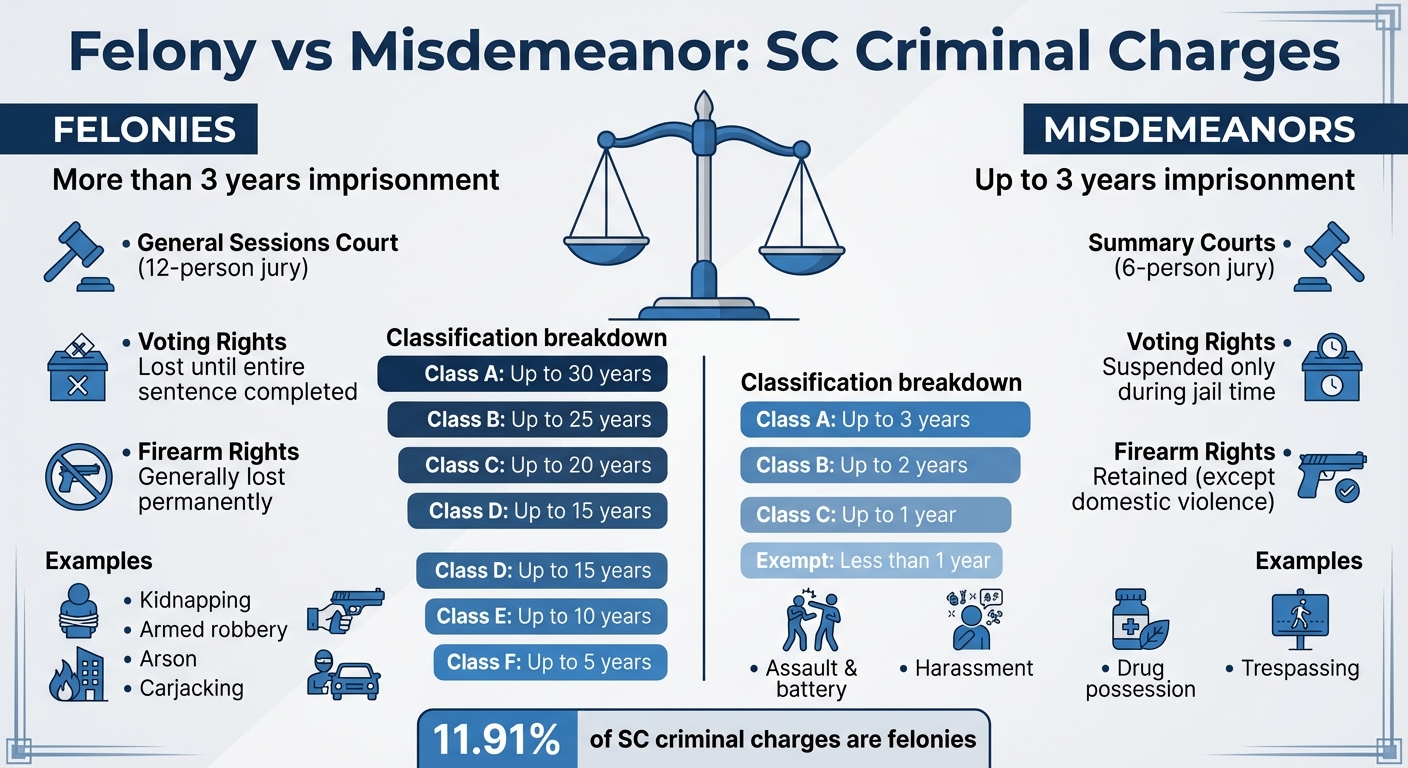
South Carolina Felony vs Misdemeanor Classification Chart
Felony Classifications and Penalties in South Carolina
Felony Classes A through F
In South Carolina, felonies are divided into six distinct categories (Classes A through F), each tied to a maximum prison sentence based on the severity of the crime. Here’s the breakdown:
- Class A: Up to 30 years
- Class B: Up to 25 years
- Class C: Up to 20 years
- Class D: Up to 15 years
- Class E: Up to 10 years
- Class F: Up to 5 years
It’s important to note that these are maximum sentences. The actual time served depends on various factors, such as the specifics of the case and the defendant’s criminal history. Additionally, some crimes, like murder and first-degree burglary, have their own specific penalties outlined by law.
Common Felony Offenses by Class
Each felony class encompasses a range of offenses, reflecting their seriousness:
- Class A Felonies: These involve the most severe crimes, such as kidnapping, attempted murder, voluntary manslaughter, armed robbery, and first-degree arson.
- Class B Felonies: While slightly less severe, these still include major offenses like second-degree arson, felony DUI resulting in death, and second-degree assault and battery by mob.
- Class C Felonies: Crimes in this category include second-degree criminal sexual conduct, aggravated assault and battery, and carjacking.
- Class D Felonies: Examples include third-degree arson, second-degree burglary, and first-offense manufacturing of methamphetamine or cocaine.
- Class E Felonies: These cover crimes like first-degree domestic violence, grand larceny involving property valued at $10,000 or more, forgery, and breach of trust.
- Class F Felonies: As the least severe, this class includes offenses such as voter fraud, first-offense stalking, and various minor property or administrative crimes.
Theft involving high-value property can also escalate a charge to felony status, showing how the specifics of a case can impact both classification and sentencing. These classifications not only determine potential penalties but also play a key role in shaping legal defense strategies, which will be explored further in later sections.
sbb-itb-ce0cbb0
Misdemeanor Classifications and Penalties in South Carolina
Misdemeanor Classes A, B, and C
In South Carolina, misdemeanors are treated with a tiered approach, reflecting the seriousness of the offense. Unlike many states that cap misdemeanor sentences at one year, South Carolina allows sentences of up to three years for certain misdemeanor convictions.
The state breaks misdemeanors into three main categories based on the maximum jail time allowed:
- Class A misdemeanors: Up to 3 years
- Class B misdemeanors: Up to 2 years
- Class C misdemeanors: Up to 1 year
Additionally, there’s an "exempt" category for offenses carrying sentences of less than a year. Beyond jail time, misdemeanor convictions may result in hefty fines, probation, community service, or mandatory restitution.
"A misdemeanor conviction can mean years behind bars or under probation supervision, as well as thousands of dollars in fines and fees." – Attorney Rebecca Pirius
Some Class A misdemeanors, due to their severity, may be elevated to General Sessions Court instead of being handled in Magistrate or Municipal courts. Below is an overview of offenses typically found in each class.
Common Misdemeanor Offenses by Class
Class A misdemeanors encompass serious crimes such as second-degree assault and battery, first-degree harassment, indecent exposure, and first-offense cocaine possession. The inclusion of drug-related crimes like cocaine possession underscores South Carolina’s strict stance on certain offenses.
Class B misdemeanors include first-offense possession of Schedule I or II controlled substances (such as LSD), participating in riots, and certain computer-related crimes.
Class C misdemeanors cover offenses like hazing, misconduct in office, fraudulent voting, and discharging a laser at an aircraft.
Finally, the "exempt" category addresses less severe crimes such as third-degree domestic violence, simple possession of marijuana (first offense), and trespassing. These offenses, while less severe, can still carry serious consequences depending on the circumstances.
Felonies vs. Misdemeanors: What’s the Difference?
Main Differences Between Felonies and Misdemeanors
In South Carolina, the distinction between felonies and misdemeanors boils down to sentencing length. Crimes punishable by more than three years are categorized as felonies, while those with sentences of three years or less are considered misdemeanors.
The seriousness of a crime often hinges on details like the value of stolen property or the severity of injuries caused. For instance, the Law Offices of Lori S. Murray explain:
"Sometimes, the only thing separating a misdemeanor from a felony is the value of property involved, the seriousness of an injury, or your prior record".
The way these crimes are prosecuted also varies. Felonies are handled in General Sessions Court with 12-person juries, while most misdemeanors are tried in Summary Courts with 6-person juries. However, some serious misdemeanors may be moved to General Sessions Court.
Here’s a quick comparison of the key differences:
| Feature | Misdemeanors | Felonies |
|---|---|---|
| Maximum Incarceration | Up to 3 years | More than 3 years, up to life or death penalty |
| Primary Court | Magistrate or Municipal (Summary) Court | General Sessions Court |
| Jury Size | 6 members | 12 members |
| Voting Rights | Suspended only during jail time | Lost until the entire sentence is completed |
| Firearm Rights | Retained (except domestic violence) | Generally lost permanently |
| Plea Options | Can plead "no contest" | Must plead guilty or go to trial |
| Employment Impact | May appear on background checks | Significantly limits professional opportunities |
These distinctions affect not only how cases are handled in court but also how they influence a person’s future.
Impact on Civil Rights and Criminal Records
The differences between felonies and misdemeanors go beyond sentencing and courtroom procedures – they have lasting impacts on civil rights and criminal records. Felony convictions impose harsher penalties, particularly when it comes to voting and firearm ownership.
For example, in South Carolina, a felony conviction means you lose your right to vote until you’ve completed your entire sentence, including probation and parole. In contrast, misdemeanor convictions only suspend voting rights while you’re incarcerated. Once released, your voting rights are automatically restored.
Firearm rights are another area where the two differ significantly. Felony convictions almost always result in a permanent loss of gun ownership rights. On the other hand, misdemeanors generally don’t affect firearm rights – except for domestic violence cases, which trigger a ban under both state and federal law.
When it comes to employment and housing, felonies create significant hurdles. They can disqualify individuals from obtaining professional licenses in fields like nursing, teaching, and law enforcement. Even years after serving a sentence, a felony conviction can limit access to housing, education, and job opportunities. While some first-offense misdemeanors may qualify for expungement, most felonies do not, leaving a lasting mark on a person’s record.
Defense Strategies for Criminal Charges in South Carolina
Legal Options for Defendants
If you’re facing criminal charges in South Carolina, understanding your legal options can significantly impact the outcome of your case. One common approach is plea bargaining, which can help reduce charges while protecting your rights.
For felony cases in General Sessions Court, you have the right to request a preliminary hearing within 10 days of your arrest. This hearing determines whether law enforcement had sufficient probable cause for your arrest and detention.
Another potential avenue is participation in pre-trial diversion programs. Successfully completing such programs may lead to charge dismissal and even expungement, removing the arrest from public records. Additionally, your attorney can challenge evidence by identifying procedural mistakes or violations of your Fourth Amendment rights, particularly in cases involving unlawful searches and seizures.
South Carolina’s sentencing guidelines also allow attorneys to present mitigating factors that could influence a judge’s decision. For misdemeanor charges, you might choose to plead nolo contendere (no contest). This plea allows for sentencing without formally admitting guilt, provided the court approves.
Each of these options highlights the importance of having skilled legal representation to guide you through the process.
Why You Need an Experienced Attorney
Navigating South Carolina’s criminal justice system is no small task, and having an experienced attorney by your side can make all the difference. From understanding which court will handle your case – whether it’s Summary Court for minor misdemeanors or General Sessions Court for more serious offenses – to knowing how to leverage legal strategies, a seasoned attorney is crucial.
The stakes go beyond immediate penalties. A knowledgeable lawyer can help you minimize long-term consequences, such as losing professional licenses, housing opportunities, or firearm rights.
Brendan M. Delaney Law Firm LLC offers over 24 years of experience in South Carolina’s legal system. Their client-focused approach ensures defense strategies are tailored to your unique circumstances, whether you’re dealing with a felony or misdemeanor. Early intervention is key to improving your chances of entering diversion programs, securing reduced charges, or even obtaining dismissals. Consulting with an attorney promptly can be a critical step in protecting your future.
Conclusion
Understanding how charges are classified is a key part of navigating South Carolina’s criminal justice system. The line between felonies and misdemeanors in South Carolina has a direct impact on your rights and your future. Felonies, which are punishable by more than three years, often result in losing fundamental rights like voting and firearm ownership. On the other hand, misdemeanors – punishable by three years or less – typically allow you to retain these rights, though certain convictions, like domestic violence, may still lead to firearm restrictions.
This distinction doesn’t just determine sentencing. It also decides which court will handle your case and even the size of the jury. For context, about 11.91% of criminal charges in South Carolina are classified as felonies. As James R. Snell, Jr., from the Law Office of James R. Snell, Jr., LLC, points out:
"There are no criminal charges so minor that they can’t negatively impact your employment, ability to pass background checks, or reputation in the community." – James R. Snell, Jr., Attorney, Law Office of James R. Snell, Jr., LLC
Whether you’re facing a Class A felony with up to 30 years behind bars or a Class C misdemeanor with just 30 days of potential jail time, the consequences extend far beyond the courtroom. A strong legal defense can help reduce these risks.
Fortunately, skilled legal representation can make a meaningful difference. An attorney might negotiate for lesser charges, advocate for participation in diversion programs, or even work toward expungement. Acting quickly is critical – waiting too long to take action could limit your options and weaken your case.
If you’re dealing with criminal charges in South Carolina, don’t wait. Reach out to Brendan M. Delaney Law Firm LLC for a free consultation. With over 24 years of experience in South Carolina’s criminal justice system, the firm provides tailored defense strategies to protect your rights and strive for the best possible outcome.
FAQs
Can a misdemeanor be upgraded to a felony in South Carolina?
Yes, in South Carolina, a misdemeanor can sometimes be elevated to a felony depending on the circumstances. Factors like the seriousness of the offense, repeated violations, or specific aggravating details can lead to this upgrade. Generally, crimes punishable by more than three years of imprisonment are considered felonies. For example, a misdemeanor might escalate if there are prior convictions or other significant factors involved. The final classification hinges on the penalties and specific details of the case as outlined by South Carolina law.
Can I get my charge dismissed through a diversion program?
Certain offenses in South Carolina, such as certain misdemeanors or non-violent crimes, might be resolved through diversion programs. Whether you’re eligible depends on the nature of the charge, the details of your case, and court approval. Completing a program successfully can result in the charge being dismissed, and in some situations, you might even be able to have the record expunged. It’s a good idea to consult with a criminal defense attorney to see if you’re eligible and to get help navigating the process.
Will a conviction stop me from getting a job or housing?
A criminal conviction in South Carolina, whether for a felony or a misdemeanor, can have lasting effects on your life, particularly when it comes to finding a job or securing housing. Even a misdemeanor, while considered less severe, can leave you with a criminal record that restricts your options. Felony convictions often come with even greater challenges, such as the loss of professional licenses or being barred from specific types of employment. This highlights how crucial it is to have strong legal representation to help navigate and potentially reduce these hurdles.