



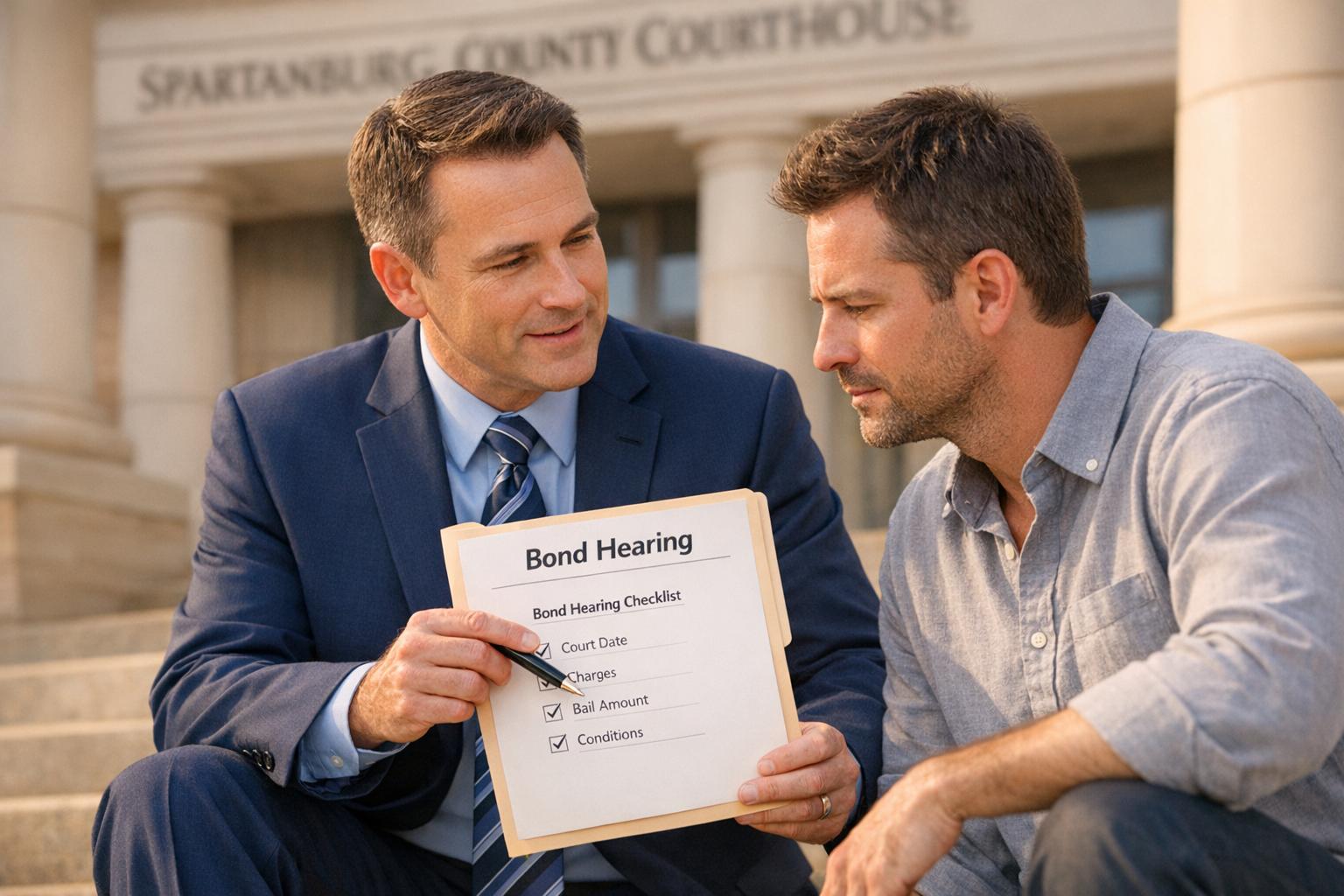
Getting arrested in Spartanburg County, SC, means a bond hearing is your first step. This happens within 24 hours of your arrest and determines if you’ll be released before trial. Judges focus on two things: whether you’ll show up for court and if you’re a danger to others. Your ties to the community, job stability, and criminal history play a big role in their decision.
Here’s what you need to know:
- Types of Bonds: Options include Personal Recognizance (PR), Surety, Cash, Property, or Percentage bonds. Each has different payment requirements and conditions.
- Preparation: Bring proof of your local ties, employment, and financial stability. Dress professionally and let your attorney do the talking.
- If Denied or Too High: You can request a review in Circuit Court, especially if circumstances change.
Violating bond conditions can lead to immediate arrest, so follow all rules set by the court. Proper preparation and a strong legal strategy can improve your chances of release.
What Are Bond Hearings in South Carolina
A bond hearing is a legal proceeding where a judge determines whether you can be released from custody before your trial begins. It’s not a trial – there’s no discussion of guilt or innocence. As attorney Timothy Kulp explains:
"At the bond hearing the merit of the case or the probable cause for arrest are not discussed. Only the issue of setting a bond is discussed at this hearing."
The judge’s focus is on two main factors: whether you’re likely to show up for future court dates and whether your release poses any risk to public safety. This hearing is generally brief, and it doesn’t involve entering a plea, filing motions, or debating evidence.
Why Bond Hearings Exist
The primary goal of a bond hearing is to ensure you’ll appear in court when required. As stated by the Spartanburg County Solicitor’s Office:
"The bond serves as a guarantee the defendant will show up for trial."
Depending on the case, the judge may release you on a Personal Recognizance bond, which is essentially your promise to return, or require financial or property collateral. Additional conditions may also be applied, such as restrictions on travel, no-contact orders, or electronic monitoring. Once your bond is posted, jails in South Carolina are required to release you within four hours.
The 24-Hour Bond Hearing Rule in South Carolina
Under South Carolina law, bond hearings must take place within 24 hours of your arrest. For domestic violence cases, the hearing must still occur within this timeframe, but it cannot proceed without key documents like the defendant’s criminal record, an incident report, or the arresting officer’s presence.
In many cases, defendants in Spartanburg attend these hearings via video conference rather than appearing in person. If your family needs information about the timing of your hearing, they can contact the Clerk of Court for assistance.
Up next, find out how these procedures are handled specifically in Spartanburg County.
How Bond Hearings Work in Spartanburg County
Location and Timing of Bond Hearings
In Spartanburg County, bond hearings are overseen by the Detention Services Division of the Sheriff’s Office. If you’re in custody, the law requires your hearing to take place within 24 hours. Once your bond is posted, the facility must release you within four hours. It’s also important to understand which judges are involved in these hearings and their specific responsibilities.
Magistrate Judges vs. Circuit Court Judges
Magistrate judges typically preside over most initial bond hearings in Spartanburg County. They are responsible for setting bonds for all offenses, except those carrying penalties of death or life imprisonment.
On the other hand, circuit court judges handle more serious cases, including capital offenses and crimes punishable by life imprisonment. They also review bonds set by magistrate judges. For violent crimes or new felony charges involving a firearm while already out on bond for a similar offense, the hearing is held in circuit court within 30 days. Additionally, if a magistrate judge sets an excessively high bond or denies bond for a General Sessions offense, your attorney can file a motion to have the bond reviewed by a circuit court judge.
Types of Bond Available in South Carolina
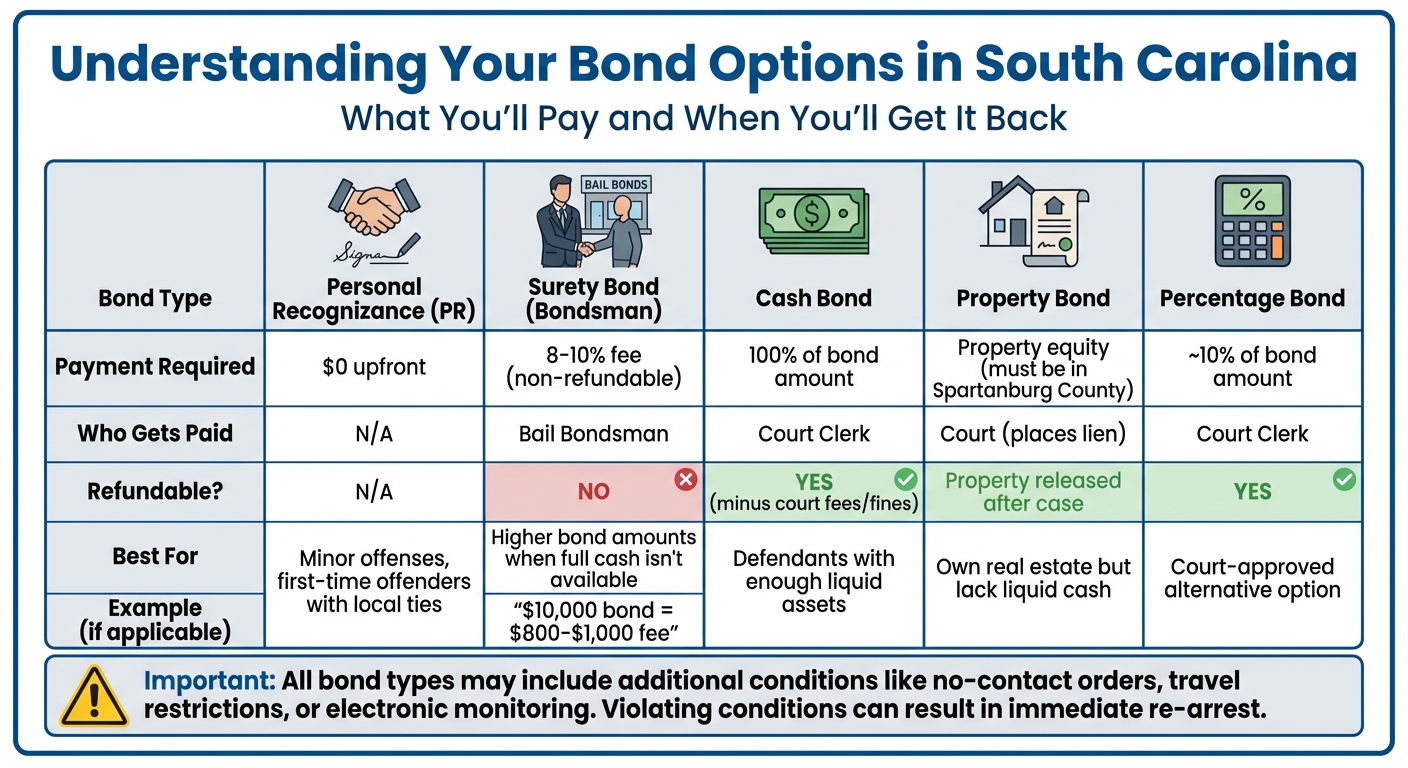
5 Types of Bonds in South Carolina: Requirements and Costs Comparison
When preparing for a hearing in South Carolina, it’s important to understand the different bond options available. The type of bond you may qualify for depends on factors like your charges, criminal history, and financial situation. Knowing these options can help you better anticipate the judge’s decision.
Personal Recognizance (PR) bonds allow you to leave jail without paying any money upfront. Instead, you sign a legal agreement promising to attend all required court dates. This type of bond is typically offered to individuals with strong ties to the community and a low risk of flight.
Surety bonds involve hiring a bail bondsman who guarantees the full bond amount to the court. You’ll pay the bondsman a non-refundable fee, generally between 8% and 10% of the bond total. For instance, if your bond is set at $10,000, your cost would range from $800 to $1,000.
Cash bonds require the full bond amount to be paid directly to the court clerk, either by you or your family. This amount is refundable at the end of your case, provided you attend all court hearings. However, the court may deduct fines or restitution from this amount. This option works best if you have enough liquid assets available.
Property bonds allow you to use real estate as collateral instead of cash. The property must be located in Spartanburg County and have sufficient equity to cover the bond.
Percentage bonds require you to pay a portion of the bond amount, usually around 10%, directly to the court. This payment is refundable if you meet all court obligations.
Here’s a quick comparison of these bond types:
| Bond Type | Payment Requirement | Who Receives Payment | Refundability | Common Scenario |
|---|---|---|---|---|
| Personal Recognizance (PR) | $0 upfront | N/A | N/A | Minor offenses or first-time offenders with local ties |
| Surety (Bondsman) | 8%–10% fee | Bail Bondsman | Non-refundable | Higher bond amounts where full cash isn’t affordable |
| Cash Bond | 100% of bond | Court Clerk | Refundable, minus court fees/fines | Defendant has enough liquid assets to pay upfront |
| Property Bond | Property equity | Court (Lien) | Property released after case | Defendant owns real estate but lacks liquid cash |
| Percentage Bond | Usually around 10% | Court Clerk | Refundable | When the court allows this alternative |
Regardless of the bond type, judges may set additional conditions that must be followed. These can include "no contact" orders with alleged victims, travel restrictions that keep you within South Carolina, or electronic monitoring through an ankle bracelet. Violating any of these conditions could lead to your bond being revoked and your return to jail.
What Judges Look at When Setting Bond
During your Spartanburg County bond hearing, the judge focuses on two key questions: Will you show up for court? and Do you pose a danger to others? Preparing for this hearing means addressing both of these concerns.
Judges examine several factors, including your criminal record, incident reports, pending cases, current bonds, and even entries in the SLED gang database.
"When setting a bond, the judge looks at the defendant’s past criminal history, their ties to the community and the facts of the case and the defendant’s prior criminal history. The judge must also consider the question of whether the defendant is a flight risk or a danger to the community." – Spartanburg County Solicitor’s Office
In addition to your criminal history, judges also evaluate your personal situation. They consider family connections, how long you’ve lived in the area, your job status, financial resources, and mental health. If you voluntarily turned yourself in, make sure your attorney highlights this – it shows you’re not trying to evade the charges.
Community Ties, Employment, and Flight Risk
Having strong ties to the community can work in your favor. Family presence, steady employment, and long-term residency all suggest you’re less likely to flee. To support your case, bring documents like utility bills, lease agreements, or letters from your employer. Character references from family members can also help.
Your track record with the court system is another factor. If you’ve missed court dates in the past, the judge may see you as a flight risk. Be ready to explain any previous absences and provide evidence that your circumstances have changed. Judges also consider your financial situation to set a bond amount that ensures your return to court without being overly burdensome.
Next, let’s look at how public safety concerns impact bond decisions.
Public Safety Concerns
Even with strong community ties, judges may deny or limit bond if they believe your release could endanger others.
The charges against you play a big role here. For serious crimes classified as violent under South Carolina law – like first-degree burglary, armed robbery, or criminal sexual conduct – magistrate judges can deny bail altogether. If you’re facing violent charges while already out on bond for another offense, a Circuit Court judge will likely oversee your hearing with stricter scrutiny.
In cases involving victims, their input is crucial. Victims have a constitutional right to speak at your bond hearing, and their testimony about feeling threatened can carry significant weight. Judges may also review a Victim Impact Statement, which outlines the emotional and financial toll of the alleged crime.
If public safety is a concern, your attorney can suggest alternatives to outright bond denial. These might include GPS ankle monitors, house arrest, no-contact orders with victims, or travel restrictions. Such measures can address the judge’s concerns while allowing you to prepare your case outside of jail.
sbb-itb-ce0cbb0
How to Prepare for Your Bond Hearing
Getting ready for a bond hearing can influence how a judge perceives your case. Showing up with the right documents, a professional appearance, and supportive witnesses signals that you take the process seriously.
Documents You Should Bring
Make sure to bring documents that highlight your ties to Spartanburg County. For example, pay stubs or a letter from your employer can show steady work and financial stability. Utility bills, lease agreements, or mortgage statements can demonstrate how long you’ve lived in the area. If you have financial records that could help the judge determine a fair bond amount, have those ready as well.
Character reference letters are also helpful. These should come from people like family members, employers, church leaders, or community organizations and focus on your reliability and good character – not the specifics of your case. If you have medical records related to mental health, bring them too. Judges may consider your mental health when deciding on bond conditions.
Another useful tool is a "strength sheet", a summary that highlights positive aspects like stable employment, family responsibilities, and your low risk of fleeing. This can help direct the judge’s attention to the most important points. These documents play a key role in shaping how you’re presented in court.
How to Act and Dress in Court
Punctuality is critical – arrive early, as being late can hurt your credibility. Dress appropriately, as your appearance can influence how the judge views you.
"Respect and humility impress the court. Judges see many cases each day; a defendant who shows remorse, responsibility, and readiness goes further than one who acts dismissive." – Garrett & Walker, Law Firm
Let your attorney handle most of the speaking. Avoid discussing case details, as anything you say could be used against you. If the judge asks you a direct question, answer honestly and focus on your willingness to meet court requirements.
If you’re neurodivergent, make sure the judge or court staff is aware. Former Bond Court Magistrate Judge Ellen Cleary explains:
"Nobody wants to be the judge that admonishes an autistic defendant to make eye contact. Do not assume that the judge knows if your client has issues that might affect his behavior in court".
This can help avoid misunderstandings about behaviors like avoiding eye contact.
How Family and Character Witnesses Can Help
Supportive witnesses can further strengthen your case. Bond hearings in South Carolina are open to the public, so having family members and friends present can emphasize your strong support network.
Judges often consider family ties and character when setting bond. Family members can vouch for your reliability and provide insight into your mental health. If the judge is thinking about releasing you into someone’s custody, that person should be ready to explain how they’ll help you follow conditions like curfews or travel restrictions.
Witness testimony should focus on your community ties and character, not the details or outcome of your case. Keep in mind that bond hearings are brief and only determine whether you’ll be released – not the final result of your case.
What to Do If Bond Is Denied or Set Too High
When a judge denies bond or sets an amount beyond your financial reach, there are legal options available to challenge or revisit the decision. South Carolina law provides pathways to request a review, especially if your situation changes or your case experiences delays.
Below, we’ll break down the steps you can take to address these bond decisions.
Requesting a Bond Review in Circuit Court
In Spartanburg County, Circuit Court judges can review and potentially change bond decisions made by magistrate judges for General Sessions offenses. To initiate this process, you’ll need to file a motion for reconsideration with the Spartanburg County Clerk of Court.
If your initial motion has already been decided, further motions will only be considered if you provide documented evidence of significant changes, such as securing a new job, a change in health status, or updated living arrangements. Without clear proof of these changes, the Chief Judge can deny your motion without holding a hearing.
Additionally, if you’ve been held in custody for more than six months while awaiting trial, you’re entitled to request a bond review by the Circuit Court. Filing a motion for a speedy trial is another option; if the state fails to act promptly, the court may reconsider your bond terms.
For the first 30 days – or until a grand jury indictment – the magistrate and Circuit Courts share jurisdiction over bond revocation. This provides a short window to address bond issues at the magistrate level.
While navigating bond reviews, it’s equally important to understand the consequences of violating any bond conditions.
What Happens If You Violate Bond Conditions
Breaking the terms of your bond can lead to serious consequences. Violations may result in immediate arrest, bond revocation, or even contempt of court charges. For violent offenses or firearm-related felonies, the stakes are even higher. If you’re charged with one of these offenses while already out on bond for a similar charge, your bond will be automatically revoked. In such cases, the Circuit Court must hold a hearing within 30 days to address the revocation.
To avoid complications, it’s critical to follow all court-imposed conditions. These may include curfews, travel restrictions, regular check-ins, or electronic monitoring. If electronic monitoring is required but you’re unable to afford the associated costs, you can request a hearing to have the fees waived by demonstrating exceptional financial hardship.
Conclusion
A bond hearing is a crucial moment in your legal process. During this hearing, judges evaluate whether you’re likely to flee or pose a threat to the community. They consider factors like your family connections, job stability, and how long you’ve lived in Spartanburg County. By law, you’re entitled to a bond hearing within 24 hours of your arrest, and once bond is posted, the jail must release you within four hours.
To increase your chances of success, gather documents that demonstrate your ties to the community and present yourself in a professional manner. It’s also wise to exercise your right to remain silent during the hearing, as any statements made could be used against you later in court.
If your bond is denied or set at an amount you can’t afford, you have the option to request a review by the Circuit Court. Understanding the bond process in Spartanburg County and collaborating with a skilled criminal defense attorney are key steps to securing a favorable outcome and safeguarding your rights.
FAQs
What do judges look at when determining bond amounts?
When determining bond amounts, judges weigh a variety of key factors. These typically include the severity and nature of the charges, the defendant’s past criminal record, and any potential threat they might pose to public safety. Personal circumstances also play a role, such as family connections, employment status, financial situation, and how long the individual has been part of the local community.
Another critical consideration is whether the defendant is likely to show up for future court dates. A pattern of missed court appearances or unresolved charges can negatively impact the decision. Demonstrating responsibility and cooperation during the hearing can leave a favorable impression on the court.
Can my bond conditions change if I can no longer afford them?
Yes, bond conditions can be modified if your financial circumstances take a turn. Courts recognize that life situations can change, and they’re open to reviewing bond terms if there’s a notable shift in your financial status or other key factors.
To seek a modification, you or your attorney would need to file a motion with the court. This motion should clearly outline how your situation has changed and include solid evidence to back up your request. Judges will carefully assess whether the proposed adjustment is fair and warranted.
What can I do if my bond is denied or seems too high?
If your bond is denied or set at an amount you can’t afford, there are ways to address the issue. In South Carolina, bond can be denied for serious or violent offenses. However, you have the option to request a review or appeal the decision through a higher court or file a motion to reconsider the bond conditions.
If you believe the bond amount is unreasonably high, you can ask the court to reduce it. To support your request, you might present evidence like proof of steady employment, strong ties to the community, or a clean record – factors that show you’re likely to appear in court and aren’t a significant risk to public safety. Partnering with a criminal defense attorney can make a big difference, as they can effectively argue your case and work toward securing a more reasonable bond.